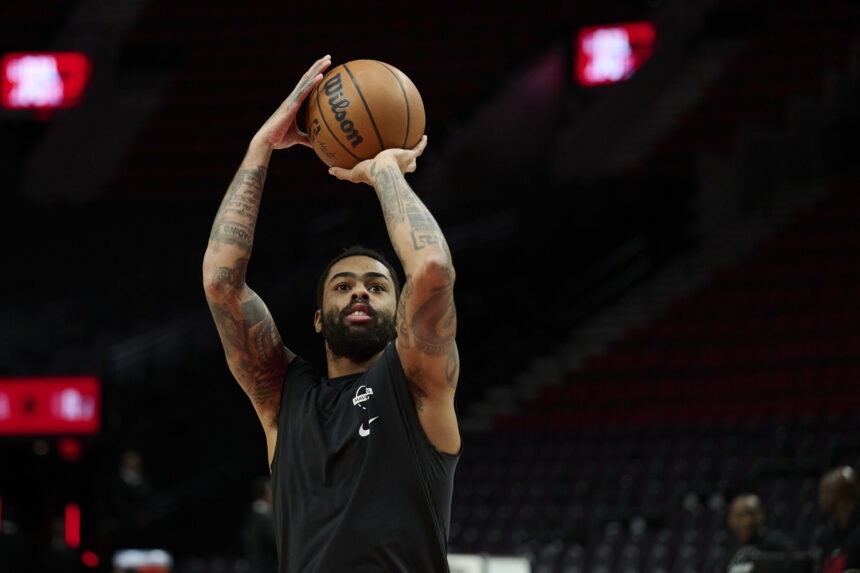
D’Angelo Russell’s next stop is uncertain, but Ira Winderman believes the Miami Heat should consider giving him a chance.
After Memphis waived Russell, the Sun Sentinel reporter pointed to Miami’s ability to add a player without closing off every subsequent roster option.
In a post on X, Winderman called Russell “worth a shot” for the Heat. He cited Miami’s roster and financial flexibility, then pointed to the contracts of Nick Richards and Myron Gardner as reasons the team could still accommodate a veteran from the buyout market later.
With roster and cap flexibility, hard to see why D’Angelo Russell wouldn't be worth a shot by the Heat. With the Nick Richards and Myron Gardner contracts, there still would be the ability down the road to add a buyout veteran.
— Ira Winderman (@IraHeatBeat) September 25, 2026
That was an argument for considering Russell, not a report of negotiations or an offer from Miami. Shams Charania’s report also did not identify a team pursuing the guard.
The basketball question is whether Russell could provide enough offense in a limited role to justify using a roster opening. His recent numbers give the Heat something to weigh on both sides.
Russell’s passing offers a reason to look, but his shooting raises questions
Russell averaged 10.2 points and 4.0 assists in 19.0 minutes per game across 26 appearances for Dallas in the 2025-26 regular season. He shot 40.5 percent from the field and 29.5 percent from three-point range.
The passing production gives a potential reserve role some substance. Miami would not need to build its offense around Russell to evaluate whether he could help organize possessions and deliver the ball to teammates in useful spots.
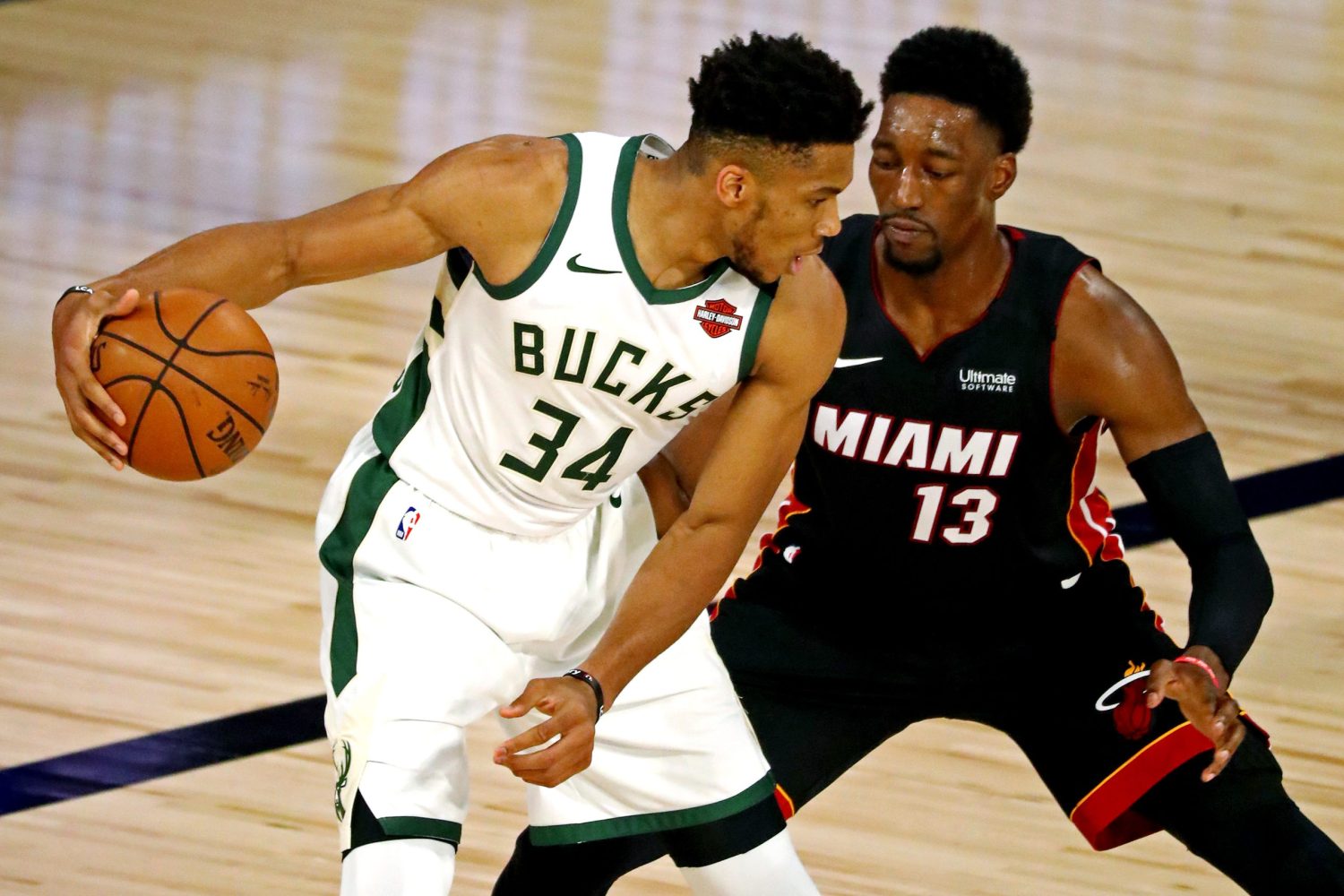
One possible application would be a ball-screen partnership with Bam Adebayo or Giannis Antetokounmpo. A guard who can make the defense commit before finding the screener could give Miami another way to start an offensive possession.
That is a potential use for Russell, rather than evidence that the Heat have a role planned for him. The shooting is the complication.
A defender who is comfortable going beneath a screen can reduce the advantage the ball handler is supposed to create, leaving the offense dependent on him making the available jumper.
Russell’s three-point percentage fell from 41.5 percent with the Lakers in 2023-24 to 31.4 percent across the Lakers and Nets in 2024-25, before declining again last season.
The strongest version of the case for signing him requires a shooting recovery, not simply a continuation of his most recent production. There is also a difference between contributing with the ball and fitting beside a star who already has it.
In a lineup built around Antetokounmpo, Russell would need to make possessions work when someone else initiates the offense. If his defender could leave him to help elsewhere, some of the benefit of adding another passer would disappear.
That is why his name alone cannot settle the fit. Miami would be evaluating the player available now and the tasks he could handle, rather than assuming an earlier season represents what comes next.
The Heat would still have to identify whose minutes Russell improves
Miami already has backcourt options, including Davion Mitchell, Dru Smith, Pelle Larsson and Ryan Conwell. Adding Russell would create another choice for Erik Spoelstra, but it would also require a decision about which combinations benefit from that choice.
The relevant comparison is not Russell against an empty roster spot; it is Russell against the player who otherwise would receive those minutes.
A useful evaluation would ask whether his passing produces better possessions, whether his shooting commands attention away from the ball and whether the lineup can defend effectively with him in it. A signing would not answer those questions on its own.
The discussion follows Tracy McGrady’s recent suggestion that Miami could have more moves ahead. Russell’s availability gives that broader roster debate a specific player to consider, though neither McGrady’s opinion nor Winderman’s recommendation establishes the Heat’s intentions.
Winderman’s case includes keeping future options available
The financial part of Winderman’s argument matters because Miami would be balancing an immediate addition against opportunities that could emerge later.
In August, Richards signed a nonguaranteed contract, and Miami had room beneath its first-apron hard cap for a minimum signing in the remaining standard-roster spot. Winderman’s Friday post made the current case that the Richards and Gardner contracts could preserve a route to another addition.
Flexibility is a reason to consider a player, but it does not remove the basketball cost of the decision. The Heat would still be allocating practice time and potentially rotation minutes to Russell, while any later change would require its own roster and financial assessment.
For Miami, the case comes down to whether a defined reserve assignment could make enough use of Russell’s passing while allowing his shooting to recover. Winderman sees a reason to explore it. The reporting so far does not establish that the Heat have decided to do so.