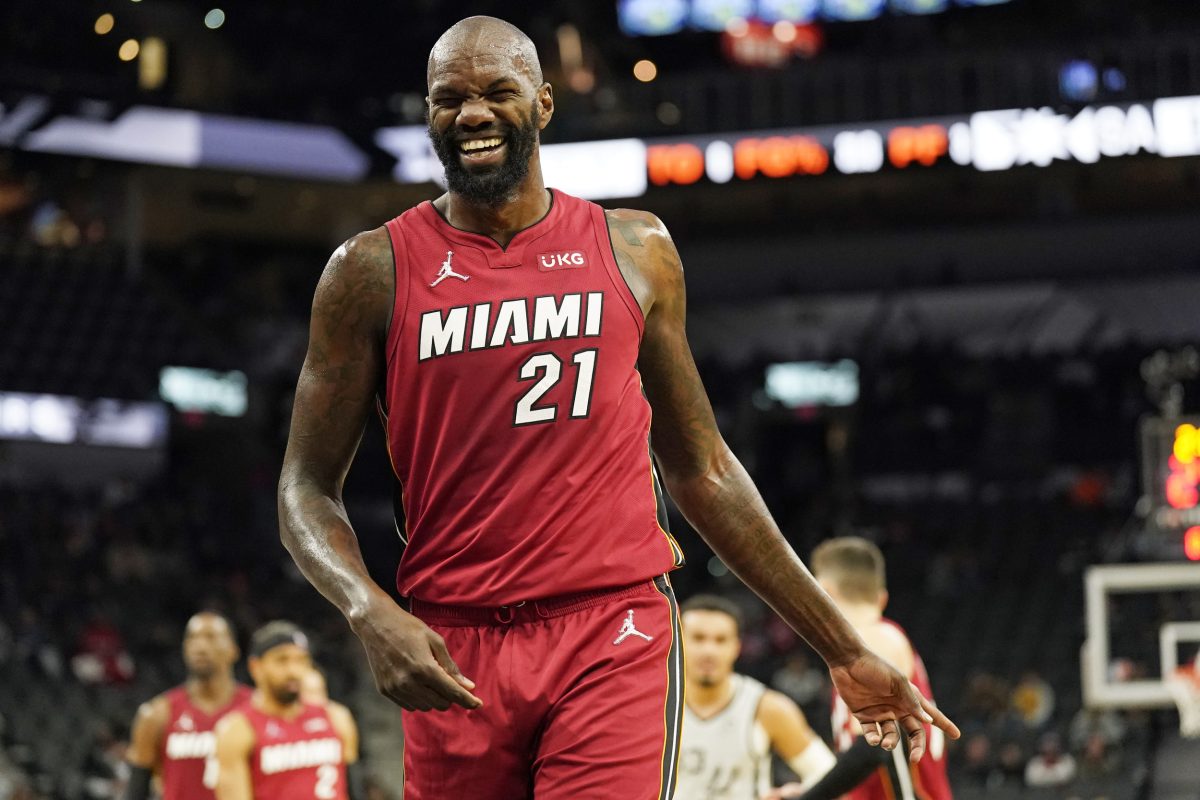

Devin Carter’s time with the Atlanta Hawks is over before it produced a single regular-season minute, and the timing has put the Miami Heat in an uncomfortable spot. Atlanta waived the former lottery pick Friday, NBA insider Jake Fischer reported Sept. 11.
The Atlanta Hawks are waiving former lottery pick Devin Carter, according to league sources.
— Jake Fischer (@JakeLFischer) September 11, 2026
The Boston Celtics were the first team publicly tied to him. Miami has one open roster spot, an acknowledged need for another guard and a front office that has spent decades hiring the sons of people who once wore the uniform.
Carter’s father is one of those people. That combination is why Heat fans spent Sunday asking the obvious question, and why the answer from the beat is more complicated than the family tree suggests.
How Carter went from lottery pick to waiver wire in 27 months
Sacramento took Carter with the No. 13 pick in the 2024 draft after his Big East Player of the Year season at Providence, then moved him to Atlanta on June 30 in a deal that attached a 2033 second-round pick to his contract.
The Hawks then spent the summer with a roster crunch they resolved, in part, by cutting him loose Friday. The follow-up was the one that changed the tenor of the weekend.
The Boston Celtics have shown interest in signing Devin Carter, sources say, once the Providence product clears waivers. https://t.co/xO4Ez6rQCj
— Jake Fischer (@JakeLFischer) September 11, 2026
The Celtics reportedly have “shown interest in signing Devin Carter” once the waiver process ran its course. It has now run its course.
The Heat connection runs through Anthony Carter
Anthony Carter came to Miami as an undrafted point guard out of Hawaii in 1999 and spent his first four NBA seasons with the Heat, appearing in 246 regular-season games with 80 starts, when it hired him as a player development coach in September 2018.
He stayed on Erik Spoelstra’s staff through the 2023 Finals run before joining the Memphis Grizzlies as an assistant, where he remains. Devin was born in Miami and grew up in South Florida while his father worked for the organization, which is why Ira Winderman of Sun Sentinel treated the Heat question as a legitimate one in Saturday’s mailbag.
A reader asked whether signing Carter would be a classic Heat move. Winderman agreed that it would, pointing to the franchise’s long habit of bringing in the sons of former players and staffers, and confirmed that Miami has both the cap room and the roster opening to do it.
Then he added the sentence that matters more than the yes.
“The question is why have both the Kings and Hawks both given up on Devin,” Winderman wrote, tying the answer to the medical file — shoulder, ankle, calf and back — that any interested team will want to read before it commits a roster spot.
Why a ‘yes’ and ‘prudence’ were mentioned in the same breath
The Heat are hard-capped at the first apron this season, and even a minimum contract for a player like Carter would leave Miami pressed tight against that line. Winderman’s recommended course was “prudence,” a word that carries weight coming from a reporter who has covered every Pat Riley roster since the 1990s.
That constraint is the product of the summer’s earlier decisions. Klay Thompson’s willingness to take a smaller salary is what created room for two more minimum deals, and Nick Richards claimed one of them, leaving Thompson and Richards as the 13th and 14th men.
Richards is on a non-guaranteed contract and Myron Gardner’s deal is only partially guaranteed, so the bottom of the roster is not fixed yet either. There is also the matter of what the Heat said they wanted.
On a Bleacher Report stream in early September, Fischer said Miami had “some internal interest in looking at a veteran guard” because the depth behind Davion Mitchell was thin.
Carter is 24 with 74 NBA games on his record. He is a reclamation project, not a veteran, and that distinction is the whole tension.
What Carter actually is right now
The profile is easy to describe and hard to evaluate. Carter is 6-foot-2 and 195 pounds, and he was drafted as a defensive guard with rebounding instincts that were unusual for his size at Providence.
His two NBA seasons produced averages of 6.4 points, 2.7 rebounds and 1.9 assists per game across those 74 appearances, with career highs of 8.9 points, 3.3 rebounds and 2.7 assists per game last season in 38 games.
The shooting is the reason two teams let him go. He has hit 40.1 percent from the field and 27.4 percent from three for his career, numbers that would make him a target for opposing defenses to ignore on a floor already built around Giannis Antetokounmpo and Bam Adebayo attacking the paint.
The case for optimism lives in his final 12 games with Sacramento, when he averaged 15.0 points, 5.0 rebounds and 3.9 assists per game on 46.1 percent shooting and 37.5 percent from deep.
That is a small sample from a lottery team playing out the string, but it is also the only stretch of his career in which he received consistent minutes, and it is the stretch a development-minded staff would point to.
The injuries — shoulder surgery that delayed his rookie debut, then ankle, back and calf problems in year two — are the reason a 24-year-old No. 13 pick is available for nothing. The Heat’s medical staff would have to sign off before the basketball staff even gets a vote.
Boston’s math versus Miami’s math
The Celtics’ situation illustrates why this could move quickly. Boston has 14 players on guaranteed standard deals and sits roughly $1.7 million under the luxury-tax line, so a straight minimum contract with its $2.45 million cap hit would push it over unless the deal is partially guaranteed, non-guaranteed or structured as a two-way.
Carter still carries two-way eligibility, which gives any team a cheaper on-ramp. Miami’s constraint is the apron rather than the tax, but the mechanics rhyme.
A two-way deal would sidestep the hard-cap concern entirely, though the Heat would have to clear a two-way spot to make it. A standard minimum would use the 15th spot the team would likely rather keep open for the buyout market or a midseason trade.
One point deserves precision because the aggregator ecosystem has blurred it: No reporter has said the Heat are pursuing Carter. Winderman said they could. Fischer said Boston is interested.
Those are different statements, and the space between them is where this story currently sits.
What happens next
Heat media day is a little more than two weeks away, and the roster that spent last week bonding ahead of camp is, by the front office’s own admission, not necessarily finished. Carter’s market will likely resolve before then.
Boston has a stated interest and a roster spot; other teams can now call his agents without restriction. If the Heat do move, the shape of the deal will tell fans how the front office really weighs him.
A two-way contract would be a low-cost bet on the bloodline and the late-season flashes. A standard minimum would mean Miami decided a 24-year-old defender was worth its last bit of apron room.
Either way, the Carter family’s connection to the organization is real, and it was never going to be the deciding factor. The medical file and the hard cap will be.