The Miami Heat have already shown a version of the defense they need. The harder question is whether that version can survive beyond a promising stretch, especially when their offense stops giving them room for mistakes.
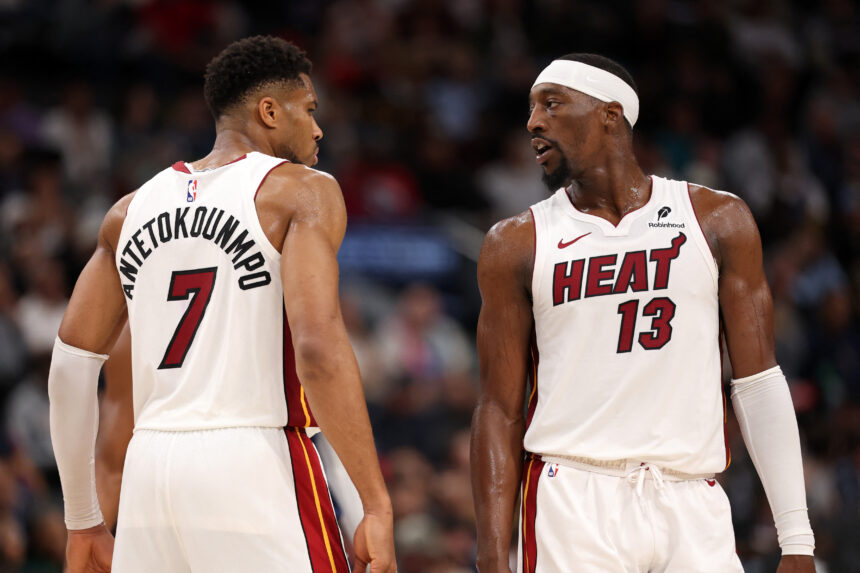
For a team built around Bam Adebayo and Giannis Antetokounmpo, that distinction matters. It leaves room for improvement without treating defensive potential as something Miami has already earned.
A good half can demonstrate what is possible; it cannot establish what an opponent should expect every night. Saturday’s team notebook argues Miami’s defense is better than its results suggest.
That is a proposition worth testing against the games themselves. The recent evidence offers encouragement, but it also argues against dismissing the trouble as a collection of unusually difficult shots going in.
Miami needs improvement that remains visible even when the final score changes the mood around the team.
The Clippers game showed a path, not a finished product
The clearest encouraging stretch came Wednesday against the Clippers. Los Angeles scored 67 points before halftime and 40 afterward, with 20 in each of the final two quarters.
That is a 27-point reduction across equal periods of playing time. These are raw scoring totals, not possession-adjusted defensive ratings, so they cannot isolate the effects of pace, shooting or execution.
They still document an important change within the same matchup. Miami’s problem was not finding an opponent it could defend for an entire evening.
It was recovering from an awful stretch: The Clippers scored 43 points in the second quarter alone. That quarter exceeded their output for the entire second half.
The comparison explains both the optimism and its limit. Sustaining the later performance would give Miami a very different chance to win. Needing that kind of recovery also makes the game unnecessarily fragile, because a few mistakes late can erase the benefit of the improvement.
“That’s our identity,” Adebayo said of their defense in the second half. “That’s what we have to be. Not every other night. We gotta be there every night. We’re not scoring, we gotta make sure they don’t score either. … Being disruptive, we were flying around. That’s what it takes. … It’s gonna be moments when it’s uncomfortable. So being able to get out of that comfort zone and then communicate, you see what the potential is.”
Golden State exposed more than a 3-point problem
The next night provided a much less encouraging test. Miami suffered a 120-100 loss, with Golden State scoring 53 points before halftime and 67 afterward. The Heat left San Francisco at 3-6.
Heat’s defensive swings in consecutive games
| Opponent | First-half points allowed | Second-half points allowed | Change |
|---|---|---|---|
| Clippers — Nov. 4 | 67 | 40 | 27 fewer |
| Warriors — Nov. 5 | 53 | 67 | 14 more |
Source: NBA official scorer’s reports linked above. Regulation only; the Clippers game’s overtime period is excluded. Figures are points allowed, not possession-adjusted defensive ratings.
The Warriors also scored 50 points in the paint and 21 on fast breaks. Those categories can overlap and should not be added together as separate baskets, but both matter when evaluating whether perimeter shooting explains the outcome.
There was damage close to the basket and before a settled defense could dictate the possession. Golden State also scored 28 points off Miami’s turnovers.
There were 19 player turnovers and 22 total turnovers for the Heat, a distinction that explains why different statistical displays can show different totals.
Ball security therefore belongs in the defensive discussion. It is difficult to evaluate the effectiveness of a half-court plan when offensive mistakes repeatedly create opportunities to attack before that plan is in place.
Protecting the ball would give Miami fewer disadvantages to overcome before it can establish its defense.
The Lakers and Pacers games show why results need context
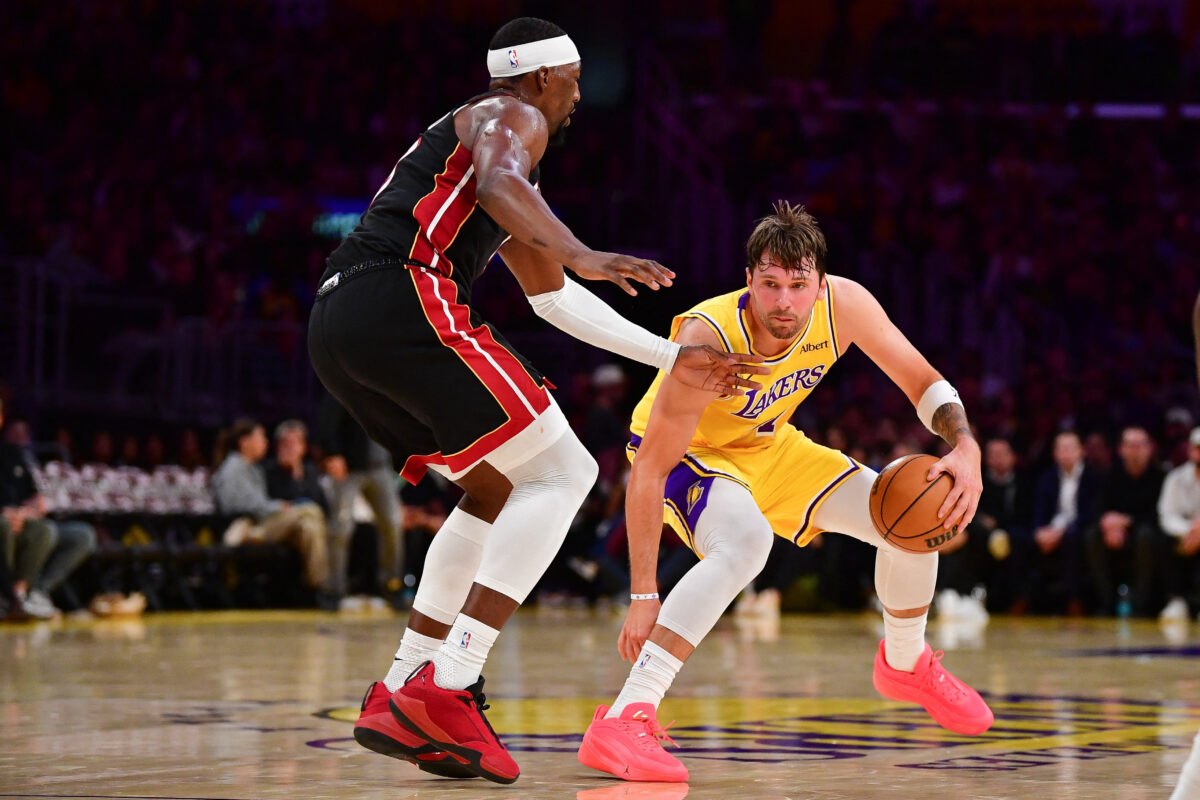
Monday’s 138-117 loss to the Lakers offers another warning against an explanation focused only on jump shooting. Los Angeles scored 60 points in the paint while making 19-of-43 attempts from 3-point range.
Miami was being hurt in both areas. Those numbers do not identify who missed an assignment, and they cannot distinguish a contested make from an uncontested one.
They do establish that taking away a few perimeter baskets would not describe the full defensive assignment. The Heat scored 72 first-half points that night and still trailed by seven.
That is particularly relevant when evaluating the developing offense: Producing enough points to look comfortable did not produce control of the game.
The opposite caution applies to the 145-125 victory over Indiana on Oct. 30. Miami won decisively while the Pacers made 17-of-37 attempts from deep.
The Heat answered with 18-of-40 shooting on their own 3-pointers. That was a successful result, but it was not evidence that opponent shooting had become harmless.
Miami’s offensive production absorbed it. A defensive evaluation should not automatically become more favorable because the Heat happened to have enough scoring to cover the cost.
Indiana’s quarter totals also show the risk of assigning one description to an entire game. The Pacers scored 42 in the first quarter and 19 in the second. The Heat had a much better period without eliminating the need to evaluate the rest of the night.
Bam’s communication concern gives Miami a useful test
The players have offered a more specific explanation than simply needing time together. Following the Lakers loss, Adebayo connected fatigue with communication problems, as Heat Nation previously covered.
“We got to really trust each other on that end,” Adebayo said. “I feel like we think we give enough and it’s not. A lot of times I feel like fatigue sets in, we stop communicating. That’s when the mistakes happen and when the lack of effort is there. We got to figure it out because no team is going to be like, ‘We’ll stop shooting threes on y’all.’”
That identifies something to watch before a shot goes up. Are defenders still exchanging information when possessions become demanding?
Does the next player understand the coverage, or does the team have to recover after the offense has already created an advantage?
Those questions are more useful than deciding the partnership works whenever Miami wins and fails whenever it loses. They also keep responsibility from being reduced to a single defender’s reputation.
A successful initial contest means little if the rest of the possession breaks down. There should be a similar distinction between improvement and a favorable shooting night.
An opponent missing open attempts can lower the score without resolving an execution problem. Conversely, a difficult make does not automatically invalidate a well-defended possession. The quality of the opportunities matters alongside the results.
The available game reports cannot settle those possession-level questions or quantify how much shooting luck has affected Miami.
They can keep the conclusion appropriately narrow: There is evidence the Heat can perform better, but the encouraging stretches have not established a dependable standard.
For Adebayo, Antetokounmpo and their teammates, the next convincing step would be making good defensive possessions less dependent on a rescue effort after a bad quarter.
Miami needs enough reliable execution to remain competitive when its own shots stop falling. That would make the case for a turnaround stronger than another isolated burst of promise.