
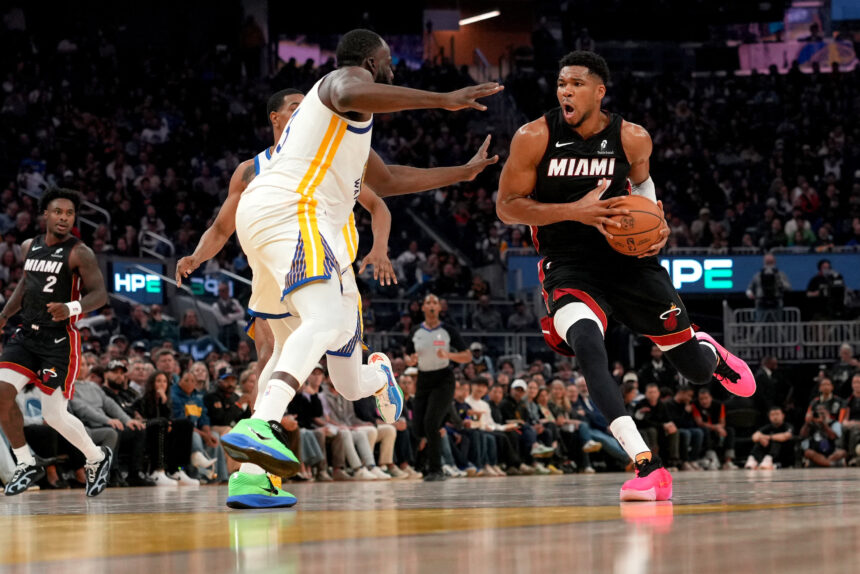
Doc Rivers questioned Giannis Antetokounmpo’s basketball IQ while discussing their time together with the Milwaukee Bucks, arguing that the Miami Heat star still needs to improve how he operates within a team offense.
Speaking on “The Bill Simmons Podcast,” Rivers praised Antetokounmpo’s passing talent but criticized his reliance on driving through defenses. His assessment also included an endorsement of Erik Spoelstra’s ability to help the forward execute more consistently.
“He has this great passing ability, but he doesn’t necessarily have this super IQ at the same time,” Rivers said. “It’s really a strange thing, and he really has one way: downhill, force, force. Every play, he wants to force it.”
The comments circulated as Miami fell to 3-6 in its first season with Antetokounmpo. They add an outside critique from a former coach to an adjustment process the Heat have already been discussing publicly, particularly when it comes to sharing offensive responsibilities with Bam Adebayo.
Doc Rivers points to execution and preparation
Rivers described a player whose physical gifts can encourage him to try to overpower a possession. He argued that Antetokounmpo needs to place more emphasis on carrying out the offense, including during practices and shootarounds.
Rivers’ explanation connected individual ability with the challenge of making that ability serve the whole lineup. He compared Antetokounmpo’s reliance on his own scoring tools with players who have rarely needed a structured approach because they could create advantages themselves.
“I wish he learned how to execute better,” Rivers said. “He’s one of those guys … that have never needed to execute because they can do it on their own. But that doesn’t help the team.
The coach also credited Spoelstra as particularly strong at organizing execution. That part of the answer gives the criticism a direct Miami connection: Rivers identified a weakness he believes remains, then pointed to the Heat’s coach as someone equipped to address it.
However, the basketball criticism came within a discussion that included appreciation for him, rather than a claim that every aspect of their relationship had been negative.
Those are Rivers’ evaluations of a player he coached. They do not establish an objective measure of Antetokounmpo’s basketball intelligence, and Miami’s opening record cannot independently prove the diagnosis.
Spoelstra has already addressed the Heat’s offensive fit
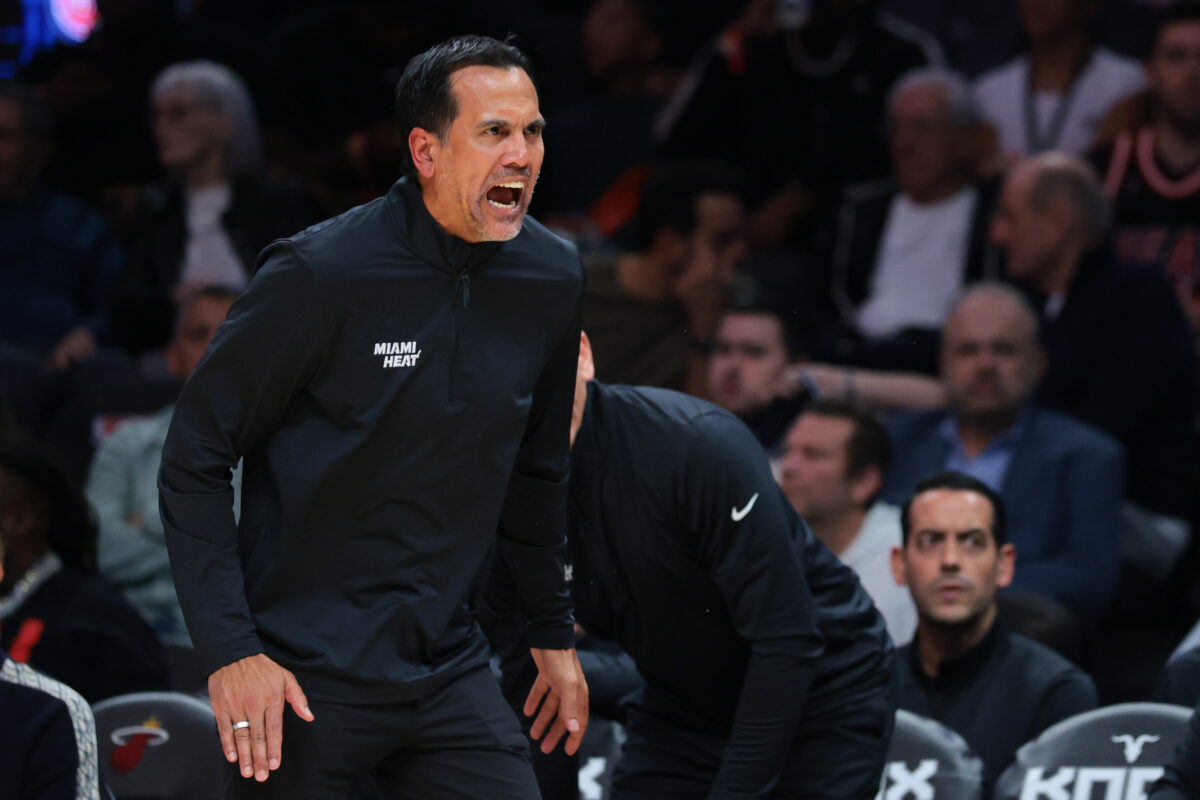
The practical issue for Miami is how Antetokounmpo’s drives fit with Adebayo’s opportunities to attack. That question was already part of the Heat’s early-season discussion before Rivers’ comments became public.
In comments covered by Heat Nation on Oct. 27, Spoelstra accepted responsibility for creating better opportunities for Adebayo. He also explained that an open perimeter shot can be the appropriate result when Antetokounmpo draws attention on a drive.
That leaves Miami with more than one offensive requirement. The Heat want Adebayo involved closer to his preferred attacking areas, while also allowing him to take a shot created by a teammate’s penetration.
Improving that balance requires decisions from the players and a workable structure from the coaching staff. Miami subsequently increased its use of pick-and-roll offense against Atlanta.
The adjustment put more emphasis on screens and coordinated movement as the Heat worked to create opportunities for both big men.
After that Oct. 28 game, Antetokounmpo discussed the need to recognize when a slower possession calls for a screen. He also described responsibilities for teammates to find space and move when another player drives.
Spoelstra’s explanation in the same report emphasized being deliberate about where the ball goes when the offense is no longer flowing freely. He wanted that organization without sacrificing Miami’s intention to play quickly.
These earlier comments are relevant because they show Antetokounmpo and Spoelstra already addressing the choices involved in running the offense. They were made before the podcast and should not be read as responses to Rivers.
Warriors loss leaves Miami searching for consistency
The Heat’s latest result offered another difficult test of that developing offense. Miami lost 120-100 to Golden State on Thursday, with Antetokounmpo finishing with 20 points, 14 rebounds and four assists.
Adebayo contributed 18 points and 10 rebounds, while Davion Mitchell led Miami with 22 points and eight assists. Those totals show production from the Heat’s principal offensive players, but they came in a game Miami lost by 20.
Golden State took control after Miami briefly led early in the third quarter. Draymond Green’s defensive work against Antetokounmpo was a significant part of the Warriors’ performance.
Miami was playing the second night of a back-to-back after an overtime victory against the Los Angeles Clippers. That schedule supplies context for Thursday’s loss without resolving the larger question of how reliably the Heat can create good possessions around their new frontcourt.
The game’s timing also matters when discussing Rivers’ remarks. Simmons promoted the podcast at 11:17 p.m. Eastern on Thursday, before the Warriors game had ended, so the criticism should not be framed as Rivers’ postgame reaction to that result.
Giannis’ record gives the criticism important context
Antetokounmpo won Finals MVP in 2021 after scoring 50 points in Milwaukee’s championship-clinching Game 6 against Phoenix.
That achievement belongs alongside any discussion of what a former coach believes he still needs to improve. A player can have areas to refine while having already demonstrated that his strengths can drive a championship team.
For the Heat, the useful question is what carries over into their current lineup. Spoelstra’s earlier explanations place responsibility on the offense as a whole: the opportunities created for Adebayo, the movement around Antetokounmpo and the decisions that connect them.
Rivers has supplied a blunt assessment of one part of that process. Miami’s task remains turning the adjustments it has already discussed into an approach that holds up consistently against different defenses.