
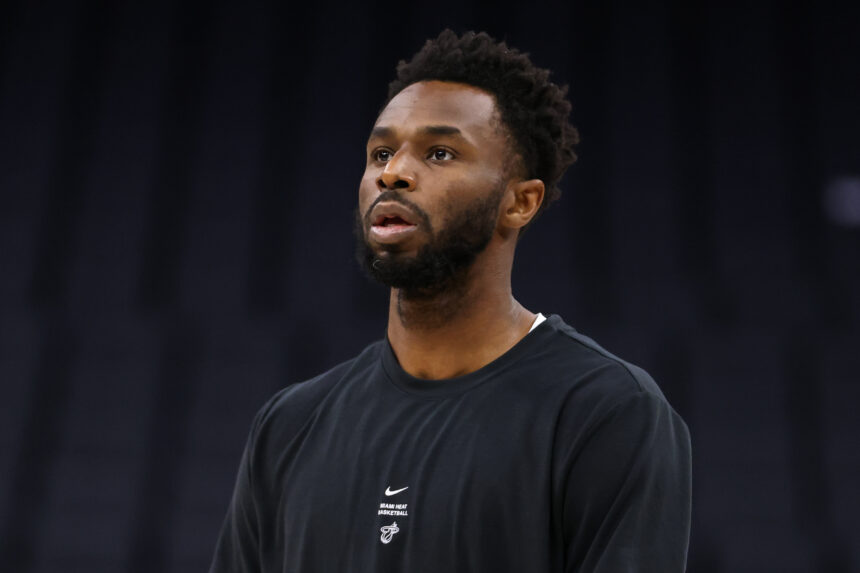
Andrew Wiggins is looking for a way to get his offense going after the Miami Heat moved him out of the starting lineup, and a reserve role could give him a different opportunity to do it.
Speaking at Tuesday morning’s shootaround in Salt Lake City, Wiggins accepted Erik Spoelstra’s decision and suggested playing with the second unit might help him become more involved.
In that group, he generally shares the floor with one of Bam Adebayo or Giannis Antetokounmpo rather than both.
“I’m just going with what Coach wants and just keep putting in that work,” Wiggins said.
Pelle Larsson took Wiggins’ starting spot in Sunday’s 114-108 win over the Sacramento Kings.
Spoelstra said Tuesday that he wants to help Wiggins become more aggressive with the reserves, while Larsson described cutting and running as ways to support Miami’s two big men.
That creates two questions for the revised rotation: whether Larsson can help the starters function together and whether Wiggins can find more offense without needing to return immediately to the opening lineup.
Wiggins’ bench move still left him with a major role
Sunday offered an important distinction between a player’s place in the starting five and his place in the game plan. Wiggins remained involved after the change, particularly with Larsson running into foul trouble.
Wiggins played 31:36, compared with Larsson’s 22:26. Wiggins scored six points; Larsson had 11.
The difference in playing time matters when evaluating the decision. Wiggins was available to absorb minutes when the new starter could not stay on the floor.
Miami changed who opened the game without removing the veteran from its competitive rotation. It also makes a simple before-and-after comparison difficult.
One night with early fouls does not establish how Spoelstra intends to divide their minutes under normal circumstances. Nor does it establish whether the reserve role will give Wiggins a sustained increase in offensive involvement.
For Wiggins, those are separate issues. More time on the floor does not automatically mean more possessions ending with the ball in his hands.
The meaningful change would be a clearer offensive assignment during those minutes, rather than a different label next to his name.
Why the Heat turned to Pelle Larsson
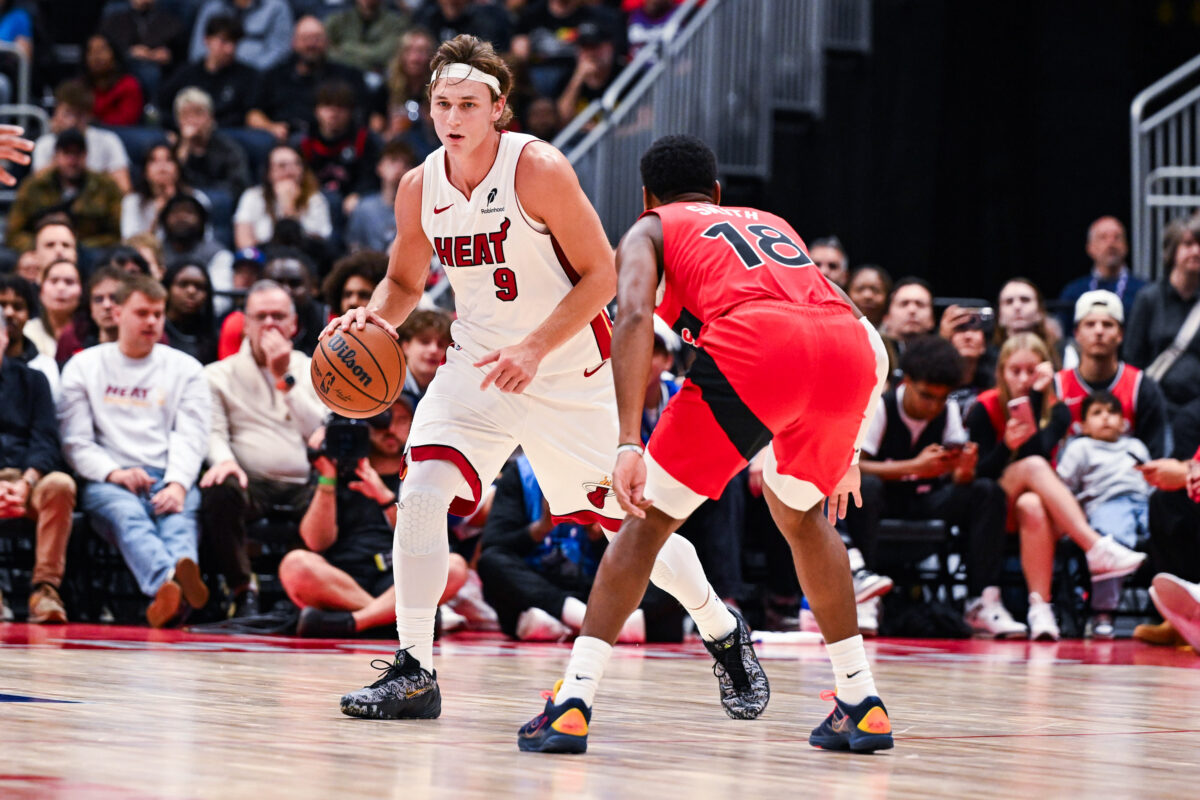
There was evidence behind the switch beyond Wiggins’ individual production. Miami’s combination of Davion Mitchell, Klay Thompson, Larsson, Antetokounmpo and Adebayo had outscored opponents by 32 points per 100 possessions across 37 minutes this season.
The version with Wiggins instead of Larsson had been outscored by 9.1 points per 100 possessions in 109 minutes. In Sacramento alone, the Larsson group finished 12 points ahead during its 11 minutes together.
The figures cover the 2026-27 regular season. Those are lineup results, not individual grades. They describe what happened with five players sharing the court, and the smaller sample for the Larsson combination makes it especially important to avoid projecting that margin over a full season.
Still, they explain why Spoelstra had reason to try a different opening group. He was choosing between combinations that had produced substantially different early results, even though neither sample could settle the long-term question.
Also, Tim Hardaway Jr.’s playing time had fallen from 18.4 minutes per game over the first seven games to six per game over the next three. The adjustment therefore extends beyond which forward starts beside Adebayo and Antetokounmpo.
Spoelstra is balancing confidence with immediate results
Spoelstra had addressed that tension before Sunday’s game, saying he still valued Wiggins and Hardaway while acknowledging that their performances could affect their minutes.
His explanation was that supporting veterans and changing the rotation could happen together.
“We want to pour life and confidence into them,” Spoelstra said.
Larsson’s ability to help different combinations work together was another part of that explanation. Spoelstra praised the guard’s competitive approach and progress, rather than presenting the move as simply a way to give Wiggins fewer opportunities.
The order of substitutions showed other changes taking shape. Wiggins entered first after Larsson’s early fouls, while Ryan Conwell and Bobby Portis followed together.
Hardaway did not enter until the second quarter, with Conwell again ahead of him in the rotation. Spoelstra also said Miami was becoming more deliberate about directing possessions through specific actions.
That is relevant to Wiggins’ next assignment: The Heat can change which players share the floor while also changing how those groups initiate offense.
A useful evaluation of the bench will therefore need to consider both personnel and execution. A different combination can create an opportunity, but it cannot by itself show whether Wiggins is receiving better touches or whether Miami is getting better shots from them.
Utah offers the next look at the revised rotation
The next test comes against a depleted opponent. The NBA’s 3:45 p.m. ET Tuesday injury report lists Lauri Markkanen, Keyonte George, Jaren Jackson Jr. and Jusuf Nurkic as out for Utah. Antetokounmpo is probable with a right wrist sprain.
Those absences provide context for whatever Miami’s combinations produce. A productive night would be useful, but it would still need to be judged against the available opposition and followed by more consistent performances.
For the Heat, the immediate questions are specific: how Wiggins is used when he enters, whether Larsson can stay out of early foul trouble and whether the reserves can support the starters without requiring another rotation change.
Tuesday’s reaction establishes Wiggins’ willingness to work within the new arrangement. The games will establish how much it helps.