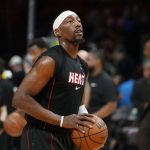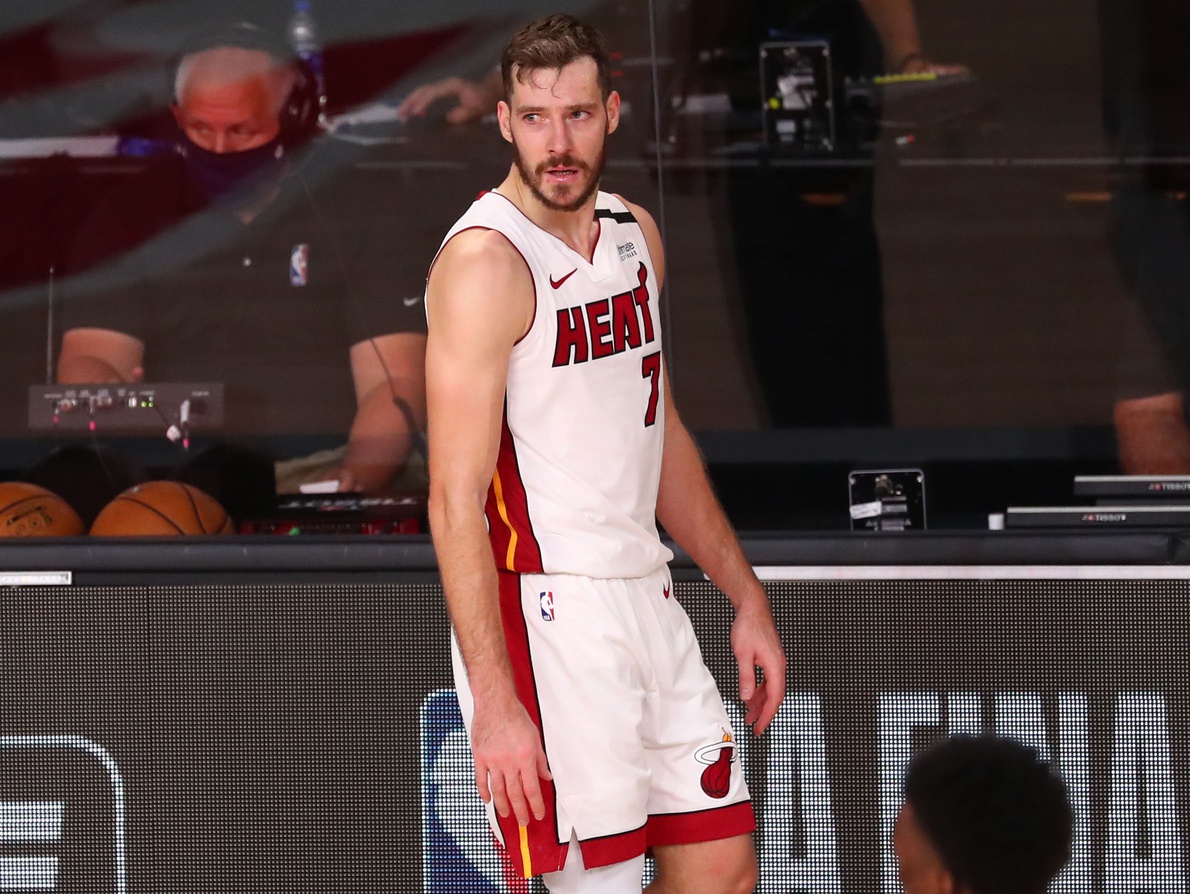
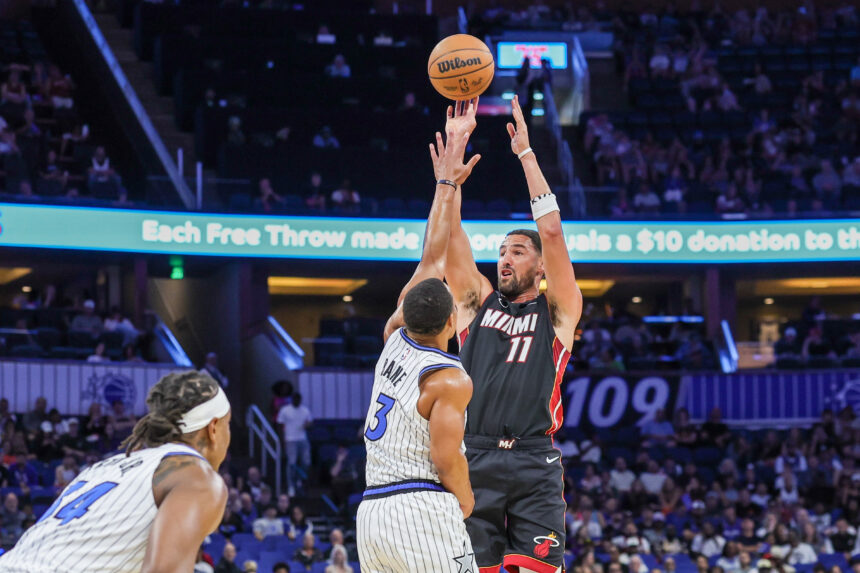
Klay Thompson is ready to leave an uneven first preseason with the Miami Heat behind him, even as his shooting becomes one of the questions surrounding the team’s regular-season debut.
Thompson addressed the issue Sunday ahead of Wednesday’s opener against the Minnesota Timberwolves. He pointed to the opportunity to begin again when the games count.
“Luckily, I have a blank slate when the regular season starts Wednesday, and [the preseason] doesn’t count,” said Thompson.
The results give Thompson something to improve on. Across four appearances, he made three of his 20 attempts from beyond the arc.
His overall shooting in the preseason was 7-of-26 from the field, with 17 total points and no free-throw attempts.
Those figures establish the problem without answering the larger question: How much did the missed shots limit what Miami wanted from him?
Erik Spoelstra’s assessment suggests the Heat are separating the quality of Thompson’s chances from the results, while also considering how opponents guard the players around him.
Erik Spoelstra sees more than missed shots
Spoelstra’s Sunday explanation focused partly on the attention Thompson continues to command from defenders.
He also said Miami had created good opportunities for him in the most recent games and described the shooter as still working his way into rhythm physically.
“He’s still getting his legs under him,” Spoelstra said. “He’ll be just fine. Actually, I’m really encouraged by all the other things he’s doing for us outside the three-point shooting.”
Thompson’s own explanation emphasized conditioning, defensive work and preparing to play consistently. His confidence does not erase the misses, but it makes clear that he was judging his preparation by more than his shooting percentage.
For Miami, the distinction is useful because a cold shooter and an offense that cannot get its shooter open present different problems.
Spoelstra’s comments point toward a finishing problem in those recent games, rather than an admission that the team has been unable to generate the chances it wants.
That remains a coaching assessment, not a tracking-data finding. The available comments do not establish how many of Thompson’s attempts were uncontested or how the offense performed on every possession he played.
Heat already saw Thompson affect a defense
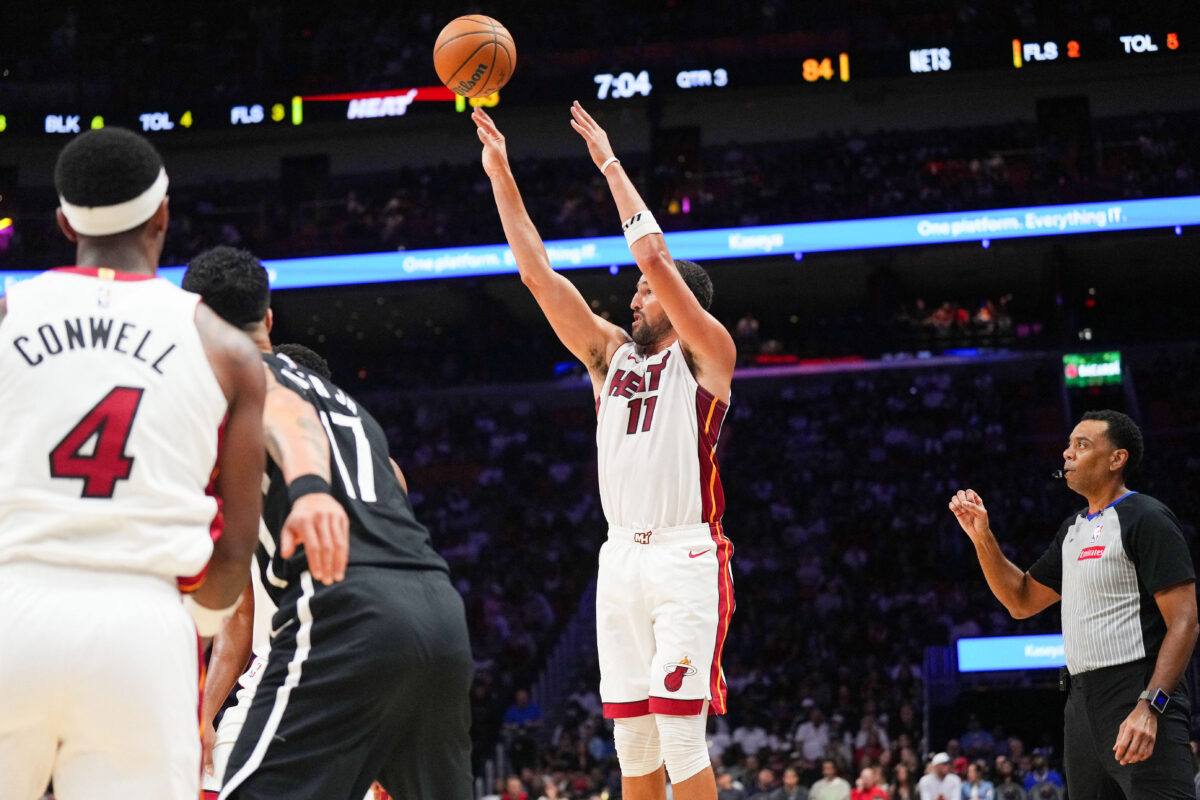
There is a specific preseason example behind the discussion of Thompson’s value away from the ball. Spoelstra described Toronto’s reluctance to send Thompson’s defender toward Giannis Antetokounmpo during Miami’s exhibition opener.
That coverage left other Heat players with openings.
“I made that point to everybody,” Spoelstra said. “If Klay would have ran outside, his defender would have gone with him. So it was basically a 4-on-4 game from there. And that’s why (Andrew Wiggins), Davion [Mitchell], and Bam [Adebayo] were pretty much open because the pull of multiple defenders that Giannis requires.”
That example explains why a possession can work for Miami without producing a Thompson basket. It also differs from Sunday’s account of good looks that failed to fall: In the Toronto game, keeping a defender occupied was itself part of the benefit.
Thompson also emphasized patience and helping teammates through his decisions away from the shot.
The practical question for the regular season is whether Miami can preserve those choices for the defense. If opponents remain reluctant to leave Thompson, someone else can benefit.
If they help away from him, the Heat need to find him and turn that opening into efficient offense. Neither outcome can be evaluated solely through his points total.
Last season offers a better shooting baseline
Thompson shot 38.3 percent from 3-point range on 7.6 attempts per game during the 2025-26 regular season with the Dallas Mavericks. That combines accuracy with substantial volume, making it more useful context than a general appeal to his reputation.
His Miami preseason percentage was 15 percent. The gap is substantial, but the 20-attempt sample is small enough that each additional make would change the percentage by five points.
Holding attempts constant, five more makes would have produced an 8-of-20 line, or 40 percent.
That calculation does not excuse five misses or forecast a rebound. It shows why this particular percentage can move dramatically without a large number of possessions.
Miami needs a longer sample to determine whether the preseason results reflect a persistent shooting problem.
Friday’s finish against Orlando was particularly unproductive: Thompson missed all seven field-goal attempts, including six threes, in 15 minutes. It left him entering the opener without a final exhibition performance that could settle the discussion.
Bam Adebayo’s return adds context for the opener
The Heat also have been preparing around an interrupted frontcourt. Adebayo returned to practice Sunday and said he expects to be ready Wednesday after a groin issue kept him out of the final two exhibitions.
His expectation is encouraging, although it is not the same as a formal announcement clearing him to play. For Thompson, Adebayo’s availability would restore another central part of the combination Miami wants to assess alongside Antetokounmpo.
In the preseason finale, Miami started Bobby Portis Jr. and Nikola Jovic alongside Thompson, Mitchell and Wiggins. Adebayo was unavailable and Antetokounmpo also sat out, as the linked Heat Nation report details.
That lineup gave Thompson a different frontcourt from the one whose interaction with his shooting has attracted so much attention. It also limits how closely that final game can preview the intended opening lineup.
That makes the Minnesota game a useful next checkpoint for more than Thompson’s individual shooting. The Heat can begin examining how their intended pieces create opportunities together under regular-season conditions, while watching whether the defensive attention Spoelstra described continues to hold.
Thompson will enter that test with confidence intact and the preseason misses still part of the evidence. Wednesday begins the more consequential assessment: whether the spacing Miami has seen and the shots it has generated can translate into dependable production.