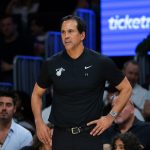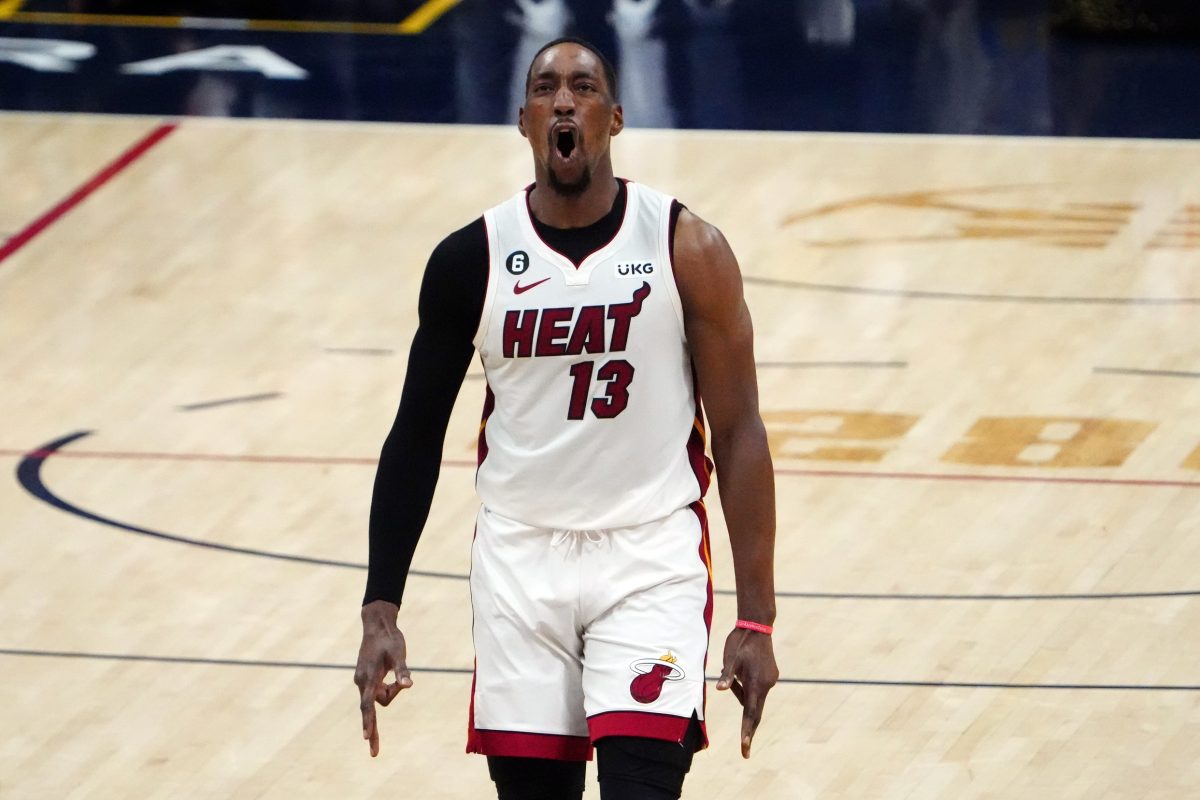
Twenty-four hours after LeBron James ended the Heat’s summer-long pursuit by choosing the Philadelphia 76ers, the person with the clearest view of the entire process explained how it happened, and his account changes the way Miami’s miss should be understood.
Klutch Sports CEO Rich Paul, speaking on his podcast alongside Max Kellerman on Friday, and separately in a conversation relayed by ESPN’s Ramona Shelburne, revealed that he personally believed for much of the process that James was headed to Miami.
The betting markets that made the Heat the overwhelming favorite in the final week were not chasing a phantom, because the man running the process expected the same outcome they did.
What ultimately stopped the reunion, in Paul’s telling, was not a better offer, a deeper roster pitch or a fractured relationship. It was the reunion itself.
The agent thought it was Miami
Shelburne spoke with Paul on Friday in the immediate aftermath of the announcement, and her account of that conversation, relayed on ESPN, is the most striking Heat-specific revelation of the entire saga. Paul told her that for a long stretch of the process, he expected the decision to end with Miami, describing the potential reunion as a natural fit and a natural story.
That detail matters because of who is saying it. Paul spent the past month insisting on every available platform that he did not know when or where his client would land, including during an appearance in which he went out of his way to praise Pat Riley just days before the decision.
The admission that his own internal read pointed to Miami confirms the Heat were never a stalking horse in this process, and that the front office’s decision to sequence its entire offseason around the pursuit was built on a genuinely live possibility rather than wishful thinking.
Paul reinforced the point on the podcast when discussing how the race unfolded, saying that every finalist held the lead at some point and beginning to elaborate on Miami’s case, mentioning the city and Riley by name, before Kellerman cut him off and the thought went unfinished. The sequence made clear where Miami stood on his mental scoreboard.
When winning there before works against you
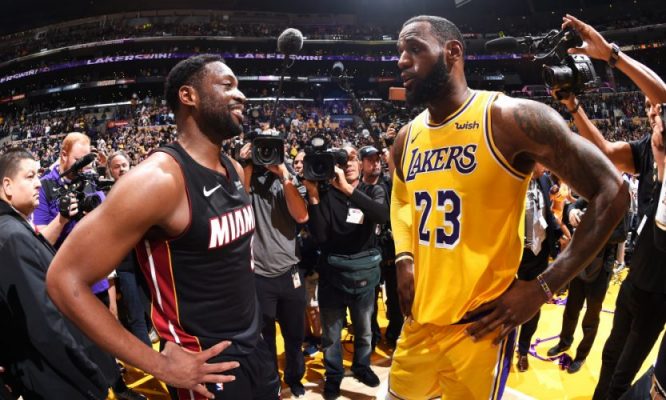
The reason a return did not happen is the part that will linger with Heat fans, because it is a reason no front office can counter. According to Shelburne’s account of her conversation with Paul, James’s history in Miami, where he won championships in 2012 and 2013, became an argument against going back rather than for it.
Paul’s explanation, as she relayed it, was that returning to a place where you have already won risks discovering it is not the same, and that the pull of something new carried real weight, or as he put it, “You want to leave those memories where they were.”
That framing recasts the four straight NBA Finals trips from 2011 to 2014, the two titles and the two Finals MVP awards not as Miami’s strongest recruiting asset but as a vault James preferred to keep sealed. It also explains why the same logic applied to Cleveland, the other former home on his list, and why the two franchises with the deepest emotional claims on him were the two he passed over in his announcement with a farewell line rather than a signature.
Nothing in the accounting suggests the Heat misplayed their hand. Paul noted on the podcast that the organizational experience in Miami, like in Cleveland and Golden State, was excellent, and he described the difficulty of eliminating any of the finalists on those grounds.
The Heat’s problem was never the pitch, and the roster-fit dynamics covered here after the decision were only part of the story. The disqualifier was the one thing Miami could not change about itself: its past with him.
What Philadelphia had that Miami couldn’t counter
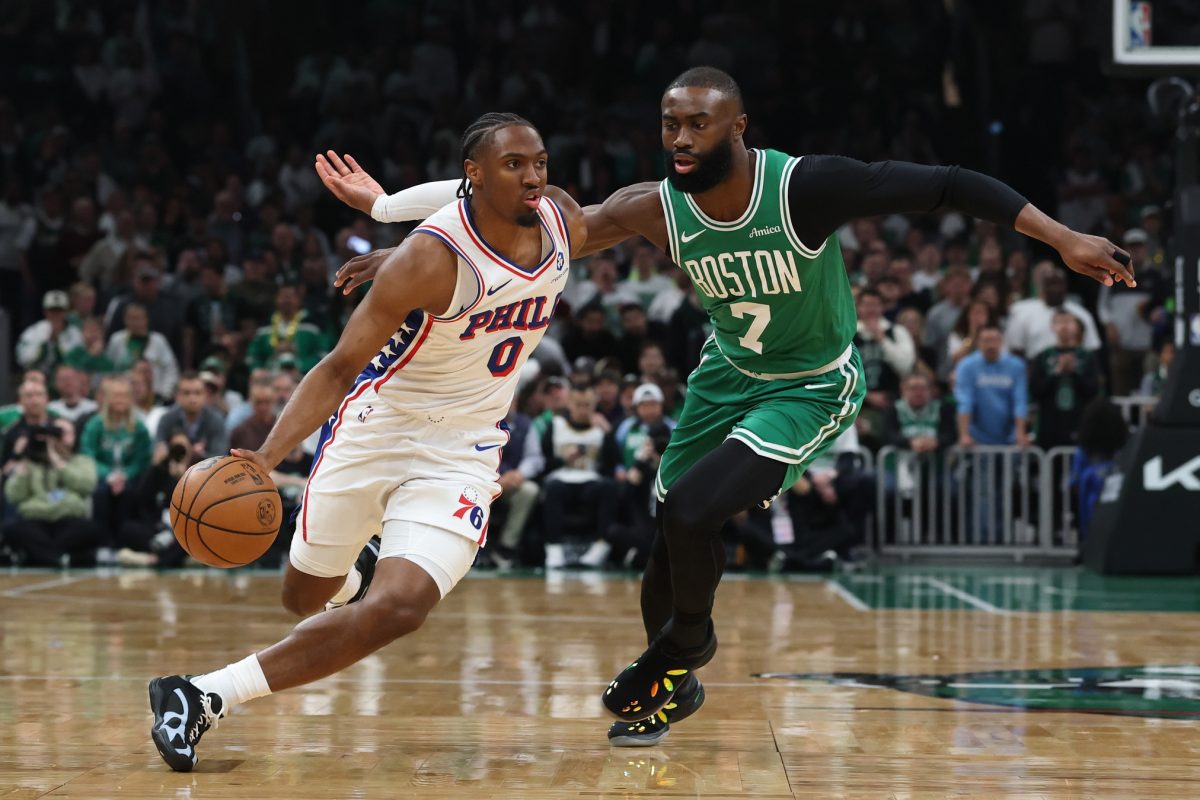
If nostalgia worked against Miami, freshness worked for Philadelphia, and Paul was specific about when the 76ers became real. He indicated on the podcast that Philadelphia only drew serious consideration after acquiring Jaylen Brown from Boston, describing the trade as the moment the franchise earned genuine attention in the process.
Miami’s pursuit ran the full length of the summer, while Philadelphia’s winning candidacy was effectively created by a single February-to-July roster stroke that the Heat had no ability to answer.
The relationships stacked on top of it. James’s bond with Tyrese Maxey, a fellow Klutch Sports client, was a significant factor in Paul’s telling, with the agent noting the two have trained together for the past five years and describing that familiarity as something impossible to buy.
James’s connection to 76ers president of basketball operations Mike Gansey, whom he knew growing up as a fellow Ohio standout, added another thread. Paul also pointed to Philadelphia’s mix of veterans and young players as the right environment for a 41-year-old star, conceding the roster is imperfect while calling the starting five very good.
One factor that did not separate the finalists was geography. James sought his family’s blessing to play in the East, far from sons Bronny and Bryce and daughter Zhuri in the Los Angeles area, and received it. That sign-off applied equally to Miami, which means the Heat lost on the margins where they could not compete rather than the ones where they could.
A decision that wasn’t final until 1 a.m.
For a fan base tempted to conclude the outcome was preordained, Paul’s timeline argues otherwise. He said on the podcast that James went back and forth all day Thursday and did not fully commit until 1 a.m. Friday, describing the process as a daily rollercoaster for a player who still felt excitement and nerves over the choice.
Paul characterized the whole thing as a “love of the game decision” driven by an obsession with basketball rather than money, which squares with the two-year, $8 million contract James accepted.
Paul also said the 76ers, Heat, Cavaliers and Warriors were all strongly considered throughout and that James never trimmed the list, declining Kellerman’s invitation to frame it as a two-team race and calling the competition layered across the board. Miami, in other words, was alive at 12:59 a.m.
The agent even addressed the speculation industry that grew around the pursuit, including ESPN NFL insider Adam Schefter’s claim that a trusted source told him to watch the Heat. Paul dismissed the outside noise as badly off target and joked that someone had sold Schefter bad information — a fitting coda for a month in which even a prematurely staged Heat press conference video briefly convinced the internet the deal was done.
What the Heat should take from the agent’s account
The practical takeaway for Miami is closure of an unusually clean kind. The Heat did not lose a bidding war, since both hard-capped finalists could offer only minimum-range money, and they did not lose a relationship battle, since Paul’s warmth toward Riley and the organization survived the outcome intact.
They lost to a structural disadvantage that only existed because the partnership had already succeeded once. The front office understood this quickly, which is why the pivot began within hours.
The Heat’s renewed pursuit of DeMar DeRozan, Klay Thompson and Bradley Beal is already underway, and the search for a playmaker, shooter and big man around Giannis Antetokounmpo and Bam Adebayo proceeds with the team’s full complement of exceptions, young players and draft capital, none of which was spent chasing James.
For the second time, LeBron James looked at Miami and chose somewhere else. The first time, in 2014, he left to finish something in Cleveland.
This time, according to the man who knows him best professionally, he stayed away to protect what he finished in Miami, and there are worse ways for a pursuit to end than being told the memories were too good to risk.