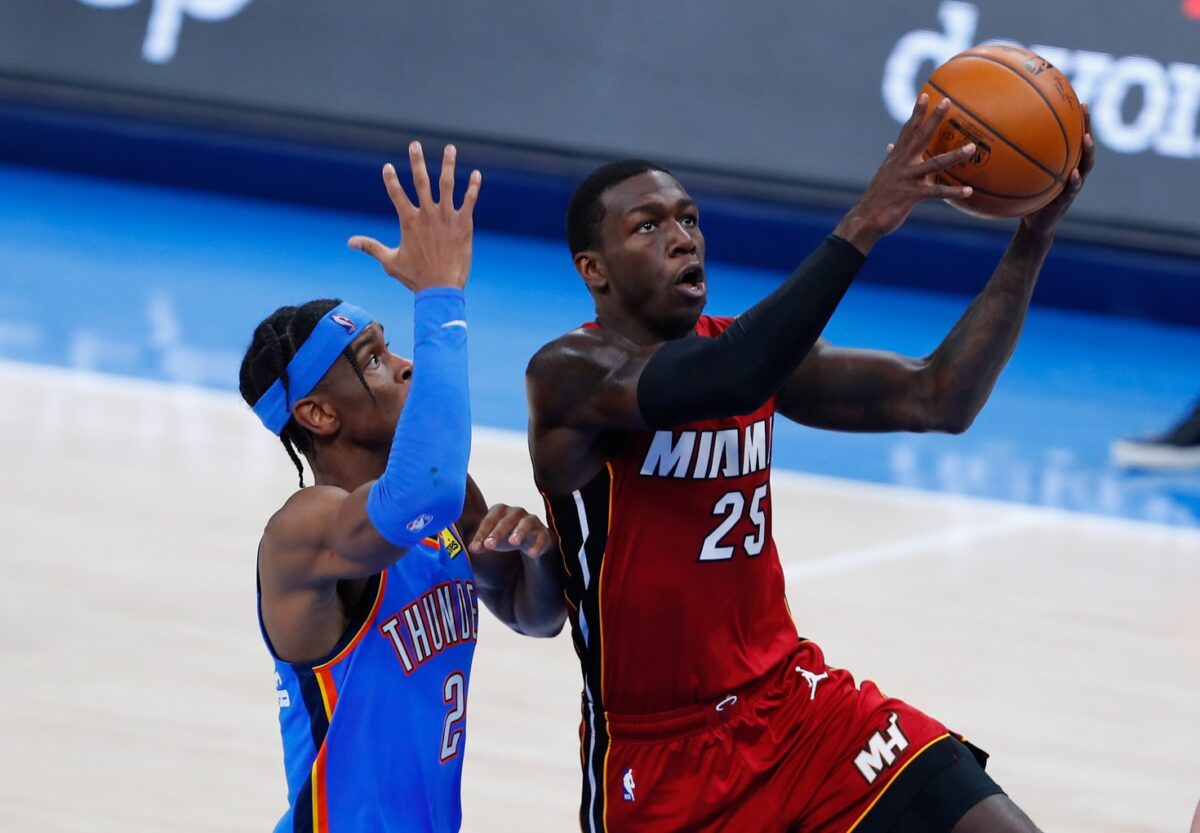

Terry Rozier has not played an NBA game since October, when he was arrested the morning after the Miami Heat’s season opener.
On Friday, his lawyers made their most aggressive move yet to change that, filing a motion in federal court that asks a judge to throw out two of the four charges against him — and pointing to a single text message they argue undermines the government’s entire theory of the case.
The filing entered into evidence a series of texts among Rozier’s co-defendants, including one instructing a gambler not to tell Rozier about wagers placed on his statistics.
The defense’s argument is that the people accused of profiting off Rozier’s performance were actively hiding their bets from him, which would cut against the allegation that he was a knowing participant in the scheme.
For Heat fans, the case has always carried a strange double weight. It concerns conduct alleged to have happened in March 2023, when Rozier played for the Charlotte Hornets, months before Miami ever acquired him — and yet the fallout landed almost entirely on the Heat, who paid his salary, absorbed his cap hit through the franchise’s most aggressive roster rebuild in years and ultimately let him go for nothing.
Friday’s filing is the first development in months that could move the case toward a resolution, and it is worth understanding both what it claims and what it does not settle.
The Text at the Center of the Filing
The message the defense is built around came from Deniro Laster, a childhood friend of Rozier and a co-defendant in the case. According to the filing, Laster texted a gambler regarding wagers tied to Rozier’s statistical lines in the Hornets’ March 23, 2023 game — the contest at the heart of the federal case — with an instruction to keep Rozier out of the loop.
“Dont tell chum bout the bet,” Laster wrote in the message entered into evidence, with “chum” being a nickname for Rozier.
The defense argues the implication is straightforward: a conspiracy that depends on a player selling inside information does not need to be hidden from that player.
“This should end the case,” Rozier’s defense team wrote in the filing. “One does not hide a bet from the person who supposedly sold it.”
The motion filed Friday targets two of the four charges Rozier faces. Rozier was initially charged with conspiracy to commit wire fraud and conspiracy to commit money laundering, with counts of bribery in sporting contests and honest services wire fraud conspiracy added later.
His previous legal team — Rozier is now working with his second defense group — filed a separate dismissal motion in December that remains pending, meaning the judge now has requests before him touching all four counts.
The filing also asserted Rozier’s full innocence, stating that he never placed bets, never agreed to underperform and did not know anyone was wagering on his numbers in that March 2023 game.
Prosecutors Aren’t Conceding Anything
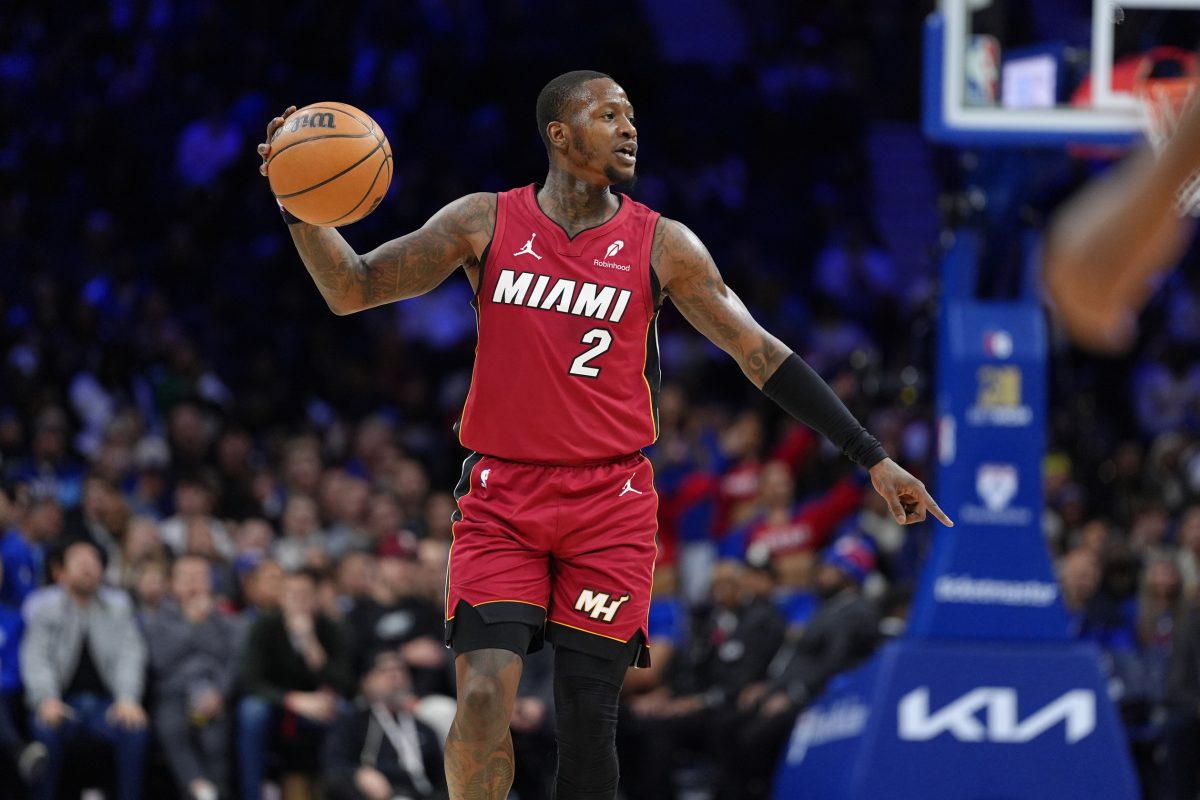
The government’s position did not move on Friday. Prosecutors have countered that the Laster text does not address the core allegation — that Rozier pulled himself out of that Charlotte game early, allowing “under” bets on his statistics to cash.
According to federal prosecutors, Rozier agreed to accept a $100,000 payment in connection with removing himself from the game, an allegation his side has denied at every stage.
That gap between the two arguments matters. The defense’s text speaks to whether Rozier knew about specific wagers; the government’s case centers on whether he agreed to alter his availability.
A judge will have to decide whether the first genuinely undermines the second, and no timeline for a ruling has been reported on either dismissal motion.
Unless something changes, the case is headed for trial on Feb. 8 — past the midpoint of the upcoming NBA season. The broader federal investigation has already produced one guilty plea, from former Heat guard Damon Jones, while former NBA players Malik Beasley and Ed Davis have also been implicated.
Rozier, who put up his South Florida home as collateral for his bond, is currently barred from contact with Heat and Hornets players, and his attorneys have sought to move the case from the Eastern District of New York to the Southern District of Florida, where he lives.
Why This Still Matters in Miami
The Heat’s connection to this case has always been financial more than basketball-related, and the numbers are not small. Miami acquired Rozier in January 2024, sending out Kyle Lowry and a first-round pick that is due to Charlotte in either 2027 or 2028.
If the case is dismissed, Rozier would receive his $26.6 million salary — money already factored into where the Heat sat last season against the salary cap, luxury tax and apron.
There was a measure of restitution. Because the Hornets did not make Miami aware of the investigation at the time of the trade, the NBA awarded the Heat a second-round pick from Charlotte, which the front office used in June on Louisville guard Ryan Conwell.
Set against a first-round pick, a starter-level salary slot and two lost seasons of roster flexibility, that is thin compensation, but it is the only piece of this saga that ever broke Miami’s way.
As for a reunion, the mechanics and the appetite both point away from it. Because the Heat waived Rozier in April, they no longer hold his Bird Rights and cannot use him in a sign-and-trade, so a dismissal would simply make him an unrestricted free agent able to sign anywhere.
While Rozier is the kind of playmaking scorer Miami’s post-Giannis roster has spent the summer hunting, the sentiment around the team had already been that his diminished play no longer met the roster’s standard. In theory the Heat could offer a minimum contract; nothing in the reporting suggests they would.
So the honest framing for Heat fans is this: Friday’s filing is a meaningful development in a case that will decide Rozier’s future, and essentially none of the possible outcomes change Miami’s.
The money is spent, the picks are settled and the roster has moved on. What remains is the resolution of a legal question that attached itself to the franchise through no action of its own — and a former Heat guard whose ability to resume his career now rests on how a judge reads one text message.
No ruling date has been reported, but with the trial set for February, the answer is coming one way or another this season.